Introducing Coventra MCP

AI assistance across the evidence synthesis workflow.

Coventra MCP connects Claude, Codex, or any MCP-compatible client directly to your review project. The agent assists with title/abstract screening, data extraction from full-text PDFs, conflict resolution, and readiness checks—using your live project criteria, study records, and evidence.

Every agent action requires researcher review before it becomes part of the canonical record. Agent screening decisions are tracked separately from human reviewer decisions. Extraction proposals require confirmed PDF source locations before they can be submitted.

Connect Coventra

Bring your review into the conversation.

Choose your AI workspace. Coventra opens the correct provider settings; you paste one endpoint, sign in, and approve only the projects that agent may use.

MCP server endpointhttps://api-origin.coventra.app/mcp

Coventra × ChatGPT

Connect in four short steps.

  1. 01

    Open Apps settings, then choose Advanced settings.

  2. 02

    Enable Developer mode and choose Create app.

  3. 03

    Paste the Coventra MCP endpoint and continue.

  4. 04

    Sign in to Coventra and approve the review projects ChatGPT may access.

ChatGPT currently requires Developer mode for custom MCP apps. Once Coventra is listed publicly, this route will become a standard app connection.
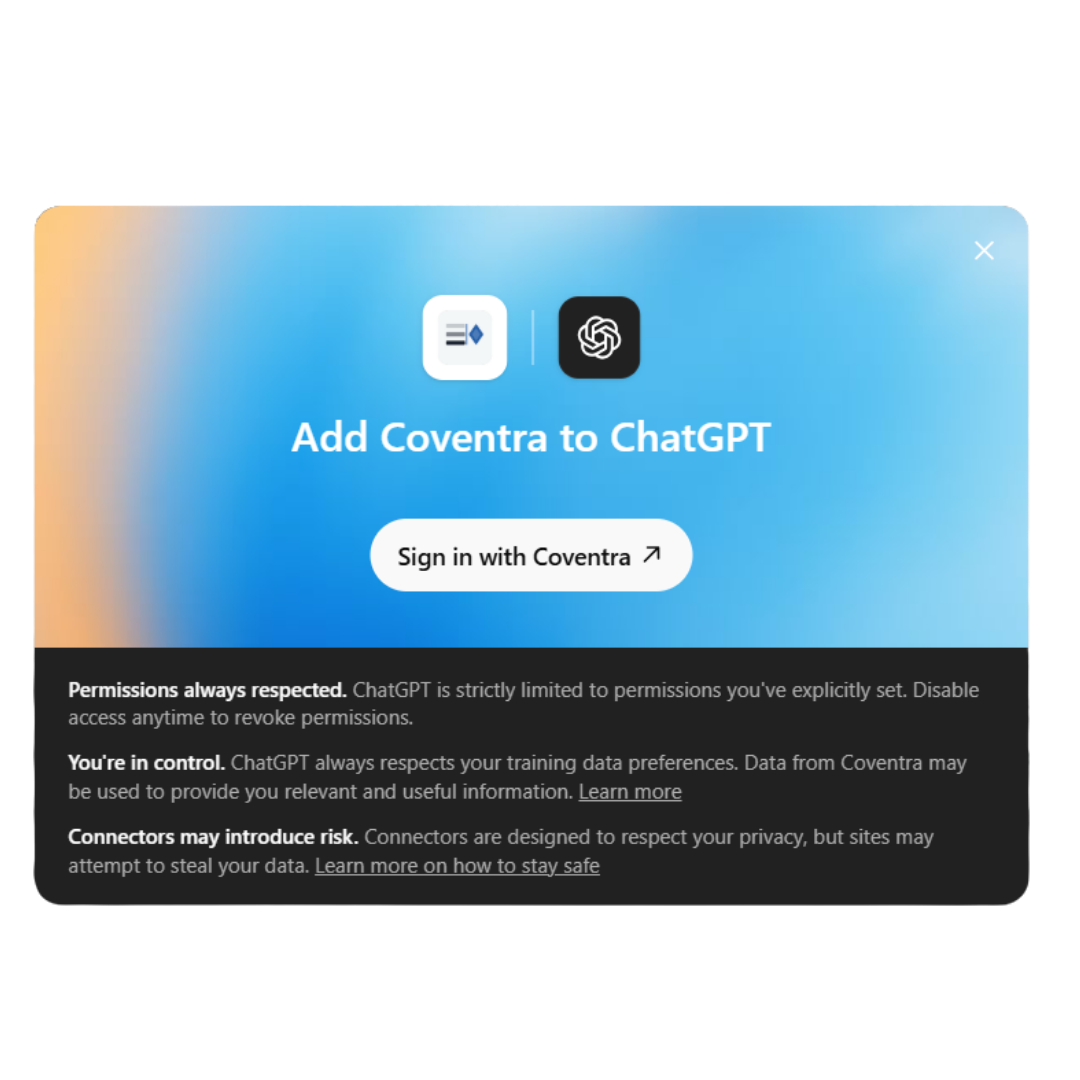
ChatGPT connection screen asking the researcher to sign in with Coventra.

What the agent assists with.

01

Title/abstract and full-text screening

The agent loads your inclusion and exclusion criteria and processes the queue in batches, returning a structured decision—Include, Exclude, or Maybe—with the specific criterion cited. Results go into the agent lane, tracked separately from human reviewer decisions and excluded from PRISMA counts.

02

Data extraction from full-text PDFs

The agent works from controlled PDF evidence views and proposes values with source anchors for reviewer inspection. Proposals without a confirmed source location in the current PDF are rejected before reaching the review queue.

03

Conflict resolution with your AI teammate

For screening and extraction conflicts, the lead reviewer works through the disagreement in conversation with their connected AI client. The agreed resolution submits as a pending proposal for human acceptance.

04

Readiness and evidence queries

Ask what is blocking the next stage, which studies have incomplete extraction, or what citations the search strategy may have missed. The agent reads the current project state and answers directly.

Research boundary

Research integrity model.

The connector is scoped to research workflows: read access to criteria, studies, and PDF evidence; proposal-only writes that require researcher acceptance. Agent output does not alter canonical screening decisions, extraction data, or analysis records without an explicit human acceptance step.

Project consentThe agent can only see projects you have explicitly connected—revocable at any time.
Scoped toolsResearch workflows only: screening context, PDF evidence, and proposal submission. Not raw database access.
Proposal-only writesAll agent writes enter the review queue and require researcher acceptance before affecting the canonical record.
Redacted audit trailAgent activity is logged with operational metadata. Source text, private quotes, prompts, and credentials are not written into public-facing audit records.